
Cord Cutting
Tom Wilmot
1/15/20262 min read
What “Cord Cutting” Actually Means (And Why So Many People Are Doing It)
If you’ve heard people talk about “cutting the cord” but aren’t exactly sure what it means, you’re not alone. Cord cutting has become a popular buzzword over the last few years — especially as cable TV prices keep rising — but many people still aren’t clear on what cord cutting actually involves.
Let’s break it down in simple terms.
What Is Cord Cutting?
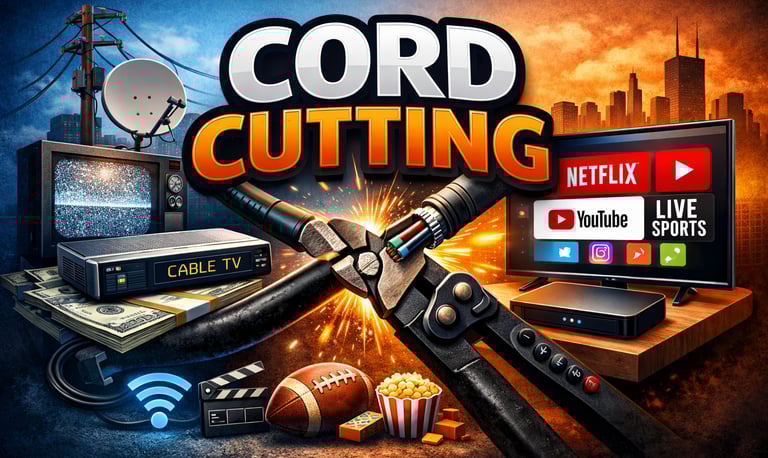
Cord cutting simply means canceling traditional cable or satellite TV service and switching to internet-based TV and streaming options instead.
The “cord” refers to the physical cable or satellite connection that used to be required to watch TV. When you cut that cord, you no longer pay a monthly cable bill or rent cable boxes from a provider.
Instead, you watch TV through:
Internet streaming
Streaming devices
Smart TVs
All-in-one streaming boxes
Why Are People Cutting the Cord?
The biggest reason is simple: cost.
Traditional cable TV often includes:
Expensive monthly packages
Hidden fees and surcharges
Long-term contracts
Equipment rental fees
Many households now pay $180–$250 per month for cable TV alone — and that’s before internet service.
Cord cutting allows people to:
Eliminate cable bills
Avoid contracts
Watch what they want, when they want
Control their monthly expenses
Does Cord Cutting Mean Giving Up TV?
Not at all.
This is one of the biggest misconceptions about cord cutting.
When you cut the cord, you’re not giving up:
Live TV
Sports
Movies
News
Kids programming
You’re simply changing how you receive them.
Instead of flipping through cable channels, content is delivered through internet-based apps and streaming platforms — often with better picture quality and more flexibility.
How Do Cord Cutters Watch TV?
Cord cutters typically watch TV using one of these methods:
1. Streaming Apps
Examples include popular subscription services, free streaming apps, and on-demand platforms.
2. Smart TVs
Most modern TVs come with built-in streaming apps, allowing you to stream without a cable box.
3. Streaming Devices
Devices that plug into your TV and provide access to streaming content with a simple remote.
4. All-In-One Streaming Boxes
These combine multiple streaming options into one easy-to-use interface — reducing the need for multiple subscriptions and apps.
Is Cord Cutting Complicated?
It doesn’t have to be.
Some people assume cord cutting means juggling multiple apps, remembering passwords, or constantly switching services. While that can happen, many cord cutters choose simpler, all-in-one solutions that make the experience feel more like traditional TV — without the high monthly bill.
For many people, cord cutting actually makes TV simpler, not harder.
Do You Need Fast Internet to Cut the Cord?
You don’t need anything extreme.
In most homes:
25–50 Mbps is enough for HD streaming
50–100 Mbps easily supports multiple TVs
If you already have home internet, you likely already meet the requirements for cord cutting.
Who Is Cord Cutting Best For?
Cord cutting is ideal for:
Families tired of rising cable bills
Sports fans looking for flexible options
Seniors who want simpler TV without contracts
Anyone frustrated with paying for channels they never watch
Is Cord Cutting Right for You?
If you:
Are paying too much for cable
Feel locked into a contract
Want more control over what you watch
Prefer a one-time solution instead of monthly fees
Then cord cutting is definitely worth exploring.
Final Thoughts
Cord cutting doesn’t mean giving up TV — it means taking control of it.
Instead of paying more every year for cable, cord cutters choose smarter, more flexible ways to watch the content they love.
If you’re curious about cord cutting or want to explore simple streaming options that don’t require juggling multiple subscriptions, feel free to reach out. We’re happy to answer questions and help you find a setup that fits your needs.
HELP
Questions? Reach out anytime.
Contact
Connect
© 2026. All rights reserved.